Fall Detection in Medical Alarms: What New Zealand Families Should Know
Fall detection is one of the features many families notice when comparing medical alarms.
It can sound simple: if a person falls, the alarm may detect it and send an alert. In real life, it is worth understanding what fall detection can do, what it may miss, and what questions to ask before choosing a medical alarm.
This guide is for New Zealand seniors and families who want a plain-English explanation before comparing options.
Quick answer
Fall detection is a feature in some medical alarms that may automatically notice a sudden fall and send an alert.
It can be helpful, especially for someone who lives alone or is worried they may not be able to press a button after a fall. But it is not perfect. It may not detect every fall, and it may sometimes send an alert when there has not been a real fall.
The safest way to think about fall detection is this: it is a useful extra feature, not a guarantee.
What is fall detection?
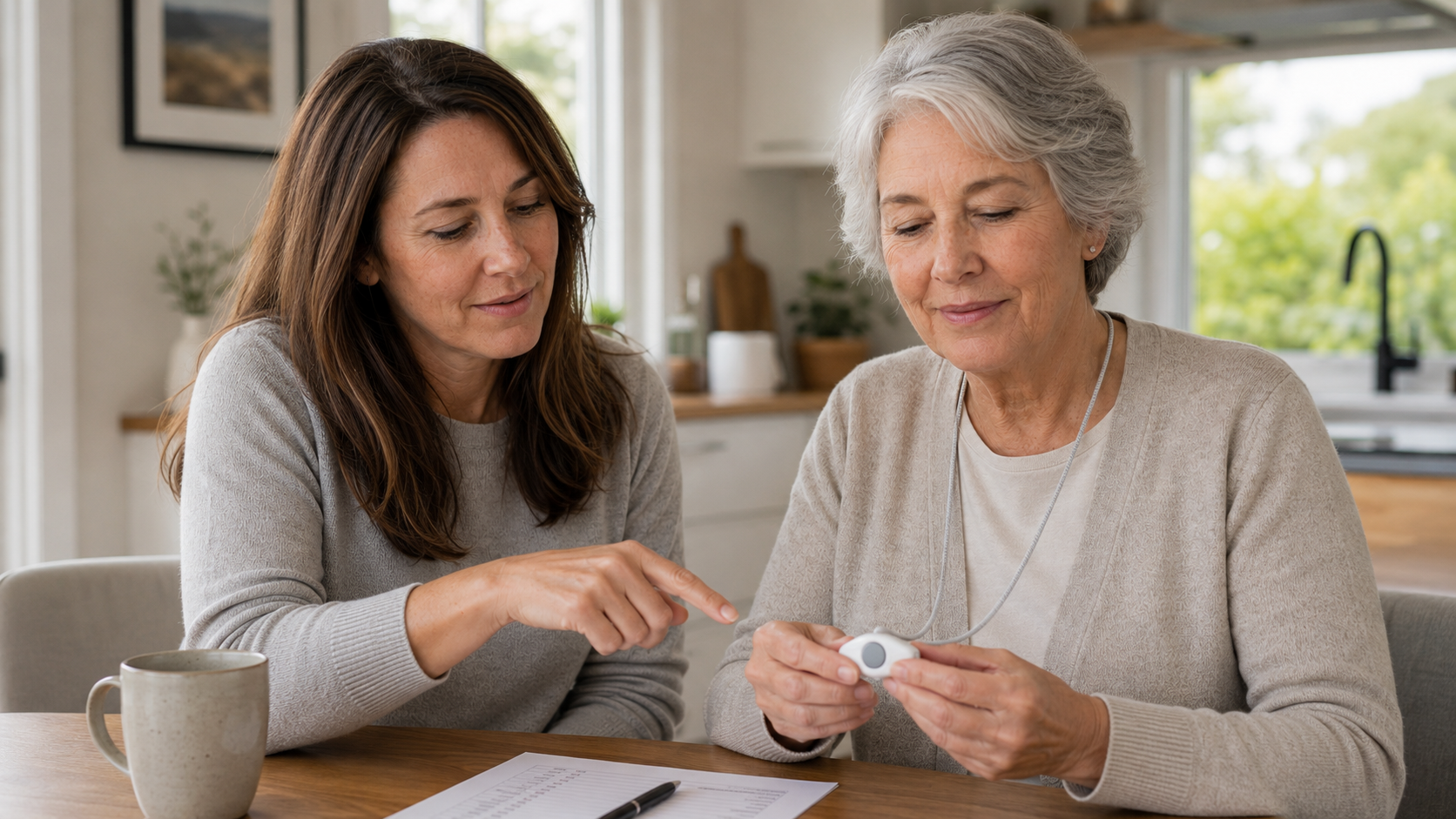
Fall detection is a feature built into some medical alarms, pendants, watches or wearable alert devices.
The device looks for sudden movement that may suggest a fall. For example, it may notice a sharp drop, a jolt, or a change in position.
If the device thinks a fall has happened, it may send an alert to a monitoring centre, family contact, or emergency contact, depending on the service.
How does fall detection usually work?
Most fall detection devices use built-in movement sensors.
You do not need to understand the technical details. The simple version is:
- The device watches for sudden movement.
- It looks for a pattern that may suggest a fall.
- If it detects that pattern, it starts an alert process.
- Some devices give the wearer a short time to cancel the alert if they are okay.
- The alert then goes to the monitoring service or nominated contacts.
Different providers may handle this differently, so it is important to ask how their system works.
Why fall detection can be useful
Fall detection may be worth considering if the person:
- Lives alone
- Has had previous falls
- Feels less steady on their feet
- Sometimes forgets to press an alarm button
- Goes outside alone
- Wants extra reassurance at home
It can also help adult children feel more confident that there is another layer of support in place.
For many families, the main value is not that fall detection is perfect. The value is that it may help in some situations where the person cannot press the button themselves.
What fall detection may not do
Fall detection does not detect every fall.
Some falls are too slow, too soft, or too unusual for the device to recognise. For example, if someone slides from a chair to the floor, the device may not notice the same sudden movement as a hard fall.
Fall detection can also sometimes create false alarms. This means the device thinks there may have been a fall when there was not one.
This does not make the feature useless. It simply means families should understand its limits before relying on it.
Fall detection is not the same as pressing the button
A medical alarm button is still important.
If the person is able to press the button, they should usually do that rather than waiting to see whether fall detection works.
Fall detection is best seen as a backup feature. It may help if the person cannot press the button, is confused, or is unable to speak clearly after a fall.
Monitored and unmonitored fall detection
When comparing medical alarms, check where the alert goes.
Monitored fall detection
With a monitored alarm, the alert usually goes to a monitoring centre. Someone can then follow the provider’s response process.
This may suit people who want a more formal support system.
Unmonitored fall detection
With an unmonitored alarm, the alert may go to family members, friends, neighbours or nominated contacts.
This may suit some families, but it depends on whether those contacts are usually available and able to respond.
Before choosing an unmonitored option, ask what happens if the first person does not answer.
At-home and mobile fall detection
Some medical alarms are designed mainly for use at home. Others can work outside the home as well.
This matters because falls can happen in different places.
Ask whether the fall detection works:
- Inside the house
- In the garden
- On walks nearby
- Away from home
- In areas with weaker mobile coverage
For someone who spends most of their time at home, an at-home alarm may be enough. For someone who walks, drives, gardens, visits friends or goes shopping alone, mobile coverage may matter more.
Questions to ask before choosing fall detection
Before choosing a medical alarm with fall detection, ask the provider these questions:
- Does fall detection come included, or does it cost extra?
- Does it work at home only, or away from home too?
- Who receives the alert?
- Is the service monitored?
- What happens if the person cannot speak?
- Can the wearer cancel a false alarm?
- What happens if there is no mobile signal?
- How often does the device need charging?
- Does the person need to wear it all day?
- Are there any setup, contract or cancellation costs?
- What should the wearer do if they fall but the alarm does not activate?
These questions are more useful than simply asking whether the device “has fall detection”.
What families should think about
Fall detection is only helpful if the person will actually wear the device.
A pendant left on the bedside table cannot detect a fall in the kitchen. A watch that is not charged cannot send an alert. A device that feels uncomfortable may be ignored.
When choosing, think about daily habits:
- Will the person wear a pendant?
- Would they prefer a watch-style device?
- Is charging easy?
- Can they understand what the device does?
- Is the button easy to press?
- Does it feel comfortable enough for daily use?
The best choice is usually the one the person is most likely to use consistently.
A simple family checklist
Use this checklist when comparing fall detection options:
- The device is comfortable enough to wear daily.
- The person understands how to press the help button.
- Fall detection is explained clearly by the provider.
- The family understands that fall detection is not guaranteed.
- The alert process is clear.
- The device works in the places the person spends time.
- Charging or battery replacement is manageable.
- Costs and contract terms are clear.
- There is a plan for false alarms.
- There is a plan if the person falls but the device does not detect it.
When fall detection may be worth paying extra for
Fall detection may be worth considering if the person has a higher chance of falling, lives alone, or may not always be able to press an alarm button.
It may also be useful when family members do not live nearby and want extra reassurance.
But if the person will not wear the device, forgets to charge it, or mainly wants a simple button for occasional use, a basic medical alarm may be enough.
The decision should be based on the person’s daily life, not just the feature list.
What to avoid
Be cautious if a provider makes fall detection sound perfect.
No fall detection system should be treated as a complete safety solution. It is one part of a wider plan that may also include:
- Keeping walkways clear
- Good lighting at night
- Suitable footwear
- Easy access to a phone
- Regular check-ins
- A clear family response plan
The goal is not to make the home feel medical or restricted. The goal is to support independence with practical backup.
FAQ
Does fall detection work every time?
No. Fall detection may help in some situations, but it does not detect every fall. Some falls may be too slow or may not create the movement pattern the device is looking for.
Can fall detection create false alarms?
Yes. Some devices may send an alert when there has not been a real fall. Ask the provider how false alarms are handled and whether the wearer can cancel an alert.
Is a fall detection alarm better than a normal medical alarm?
Not always. A normal medical alarm button may be enough for some people. Fall detection can be a useful extra if there is concern the person may not be able to press the button after a fall.
Should my parent still press the button if they fall?
Yes, if they are able to. Fall detection should be treated as a backup, not a replacement for pressing the help button.
Is fall detection useful outside the home?
It depends on the device and service. Some alarms are mainly for home use. Others are mobile and may work away from home. Ask the provider where the device works and what coverage it needs.
Conclusion
Fall detection can be a helpful feature in a medical alarm, but it should be understood clearly before choosing.
It may provide extra support if someone falls and cannot press the button. But it is not a guarantee, and it does not replace a clear response plan.
For New Zealand families, the best next step is to compare medical alarms calmly. Check how the fall detection works, who receives the alert, where the device works, and whether the person will comfortably wear it every day.
Before you finish
Want a simple way to check medical alarms, emergency contacts and phone safety?
Download the free NZ Family Tech Safety Checklist.