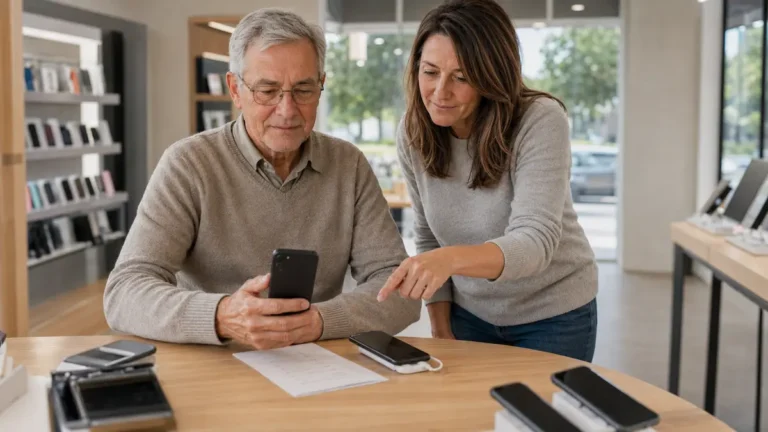

How to Choose a Phone for an Older Parent in New Zealand
Choosing a phone for an older parent can feel harder than it should.
Some phones are too complicated. Some are too small. Some are easy to call from, but harder to use for photos, messages, apps or video calls.
This guide is for New Zealand families helping a parent choose a phone that suits daily life, not just the spec sheet.
Quick answer
The best phone for an older parent is the one they can use confidently for the things that matter most.
For some people, that means a simple phone with clear buttons, loud sound and easy charging. For others, it means a smartphone with a larger screen, video calling, photos, maps, banking apps and family messaging.
Before buying, check:
- What they need the phone for
- Whether they prefer buttons or a touchscreen
- Screen size and text size
- Call volume and speaker quality
- Battery life and charging
- Emergency contacts
- Ongoing family support
- Local availability and warranty in New Zealand
Start with what your parent actually needs
Before comparing phones, write down what your parent wants to do.
A phone for basic calls is different from a phone for photos, video calls and apps.
A simple phone may be enough if they mainly want to:
- Make and receive calls
- Send short text messages
- Keep emergency contacts nearby
- Use a phone with physical buttons
- Avoid apps, notifications and complicated menus
- Charge the phone every few days rather than every night
A smartphone may be better if they want to:
- Take and receive photos
- Use video calling
- Join family group chats
- Use maps or public transport apps
- Access banking, email or health portals
- Use apps for hearing aids, medical alarms or home devices
- Keep using a phone similar to what family members use
Neither choice is automatically better. The right choice depends on confidence, eyesight, hearing, memory, hand comfort and what support is available.
Simple phone or smartphone?
|
Option |
Best for |
Things to check |
|---|---|---|
|
Calls, texts, larger buttons and fewer distractions |
Menu layout, call volume, charging dock, emergency contacts and whether text messages are easy to read |
|
|
Smartphone |
Photos, video calls, apps, maps, family messaging and online accounts |
Screen size, text size, home screen layout, battery life, updates and who will help set it up |
|
Larger smartphone |
Easier reading, clearer photos, video calls and typing |
Whether it feels too large or heavy to hold comfortably |
|
Older reused family phone |
Lower cost and familiar setup help |
Battery health, software updates, storage space and whether it is still secure enough to use |
What to check before buying
1. Screen size and readability
A larger screen can make a phone easier to use, especially for reading messages, checking caller names and viewing photos.
Look for:
- Clear screen brightness
- Adjustable text size
- Good contrast
- Easy-to-read caller display
- Simple home screen layout
- Enough space between icons
For smartphones, check whether the text size can be increased without making the screen feel crowded.
2. Sound and call clarity
For many seniors, call quality matters more than camera quality.
Check:
- Ring volume
- Speakerphone volume
- Earpiece clarity
- Vibration strength
- Whether the phone works well with hearing aids, if relevant
- Whether the person can hear calls in their usual home environment
It is worth testing the phone in a real shop if possible.
3. Buttons or touchscreen
Some older people prefer physical buttons because they feel familiar and easier to press.
Others prefer smartphones because they already use a tablet or want photos, video calls and apps.
Ask:
- Does your parent prefer pressing buttons or tapping a screen?
- Are their fingers steady enough for small touchscreen icons?
- Do they find swiping and tapping comfortable?
- Would a stylus help?
- Would a simplified home screen make a smartphone easier?
Avoid assuming that every older person needs a basic phone. Many seniors use smartphones confidently once the setup is simplified.
4. Battery life and charging
A phone is only useful if it is charged.
Simple phones often have longer battery life than smartphones, but smartphones can still work well if charging becomes part of a daily routine.
Check:
- How long the battery lasts with normal use
- Whether the charging cable is easy to plug in
- Whether a charging dock is available
- Whether the phone shows a clear low-battery warning
- Whether family can help set reminders if needed
For some people, a charging dock is easier than a small cable.
5. Emergency contacts
Most phones can store favourite contacts. Smartphones can also offer emergency contact features.
Set up:
- Close family members
- Doctor or medical centre, if appropriate
- Neighbour or trusted local contact
- Emergency contact information
- Medical notes only if your parent is comfortable adding them
Make sure your parent knows how to call the people they are most likely to need.
6. Camera and photo sharing
A camera may not matter to everyone, but it can be useful for family connection.
A smartphone may be better if your parent wants to:
- Receive family photos
- Take photos of grandchildren
- Send photos by message
- Use video calling
- Photograph documents, prescriptions or appointment notes
Keep the photo app easy to find. Remove or hide apps that are not needed.
7. Apps and online accounts
A smartphone may be needed for apps that support daily life.
Examples include:
- Banking apps
- Video calling
- Messaging apps
- Maps
- Parking or public transport apps
- Health portal apps
- Hearing aid or medical device apps
Only install what is genuinely useful. Too many apps can make the phone harder to use.
8. Local support and warranty
For New Zealand buyers, local support matters.
Check:
- Is the phone sold by a New Zealand retailer or provider?
- Is the warranty clear?
- Can the SIM card or mobile plan be set up easily?
- Is there local help if something goes wrong?
- Will family members know how to help with this type of phone?
A phone that is slightly less advanced but easier to support may be the better choice.
Family checklist before choosing a phone
Use this checklist before buying.
- We know whether the phone is mainly for calls, texts, photos, apps or video calls
- The screen is large enough to read comfortably
- Text size can be increased
- The ring volume and call volume are loud enough
- The phone is comfortable to hold
- The charging method is easy to use
- Emergency contacts can be set up clearly
- The home screen or menu can be simplified
- The phone will work with the chosen mobile plan
- There is local New Zealand warranty or support
- A family member knows how to help with setup
- The phone is not more complicated than it needs to be
Download the free NZ Family Tech Safety Checklist if you want a simple way to check phone safety, passwords, scam messages and emergency contacts.
Questions to ask your parent before buying
These questions can help avoid choosing the wrong phone.
What do you mainly want the phone for?
Some people only want calls and texts. Others want photos, video calls and family messages.
What do you find frustrating about your current phone?
Common answers include small text, quiet calls, too many notifications, short battery life or difficulty charging.
Do you want to use apps?
Apps can be useful, but they also make a phone more complicated. Only add what is needed.
Would you rather have buttons or a larger screen?
This is often one of the most important choices.
Who will help if something changes?
Phones need updates, passwords, plan changes and occasional troubleshooting. Choose something the family can support.
A simple setup can matter more than the phone model
The phone itself is only part of the decision.
A well-set-up smartphone can be easier than a poorly set-up simple phone. A simple phone can also be better than a smartphone if the person only wants calls and texts.
After buying, take time to:
- Increase text size
- Add favourite contacts
- Remove unnecessary apps
- Turn off distracting notifications
- Set up voicemail
- Add emergency contacts
- Save important numbers
- Show your parent how to answer, call back and charge the phone
- Write down the most important steps on paper
Do not try to teach everything at once. Start with the few tasks they will use most often.
When a simple phone is the better choice
A simple phone may be best if your parent:
- Does not want apps
- Mainly uses calls
- Finds touchscreens frustrating
- Wants longer battery life
- Prefers physical buttons
- Wants fewer alerts and distractions
- Is unlikely to use photos, video calling or mobile banking
The trade-off is that simple phones may be limited for family messaging, photos and modern services.
When a smartphone is the better choice
A smartphone may be best if your parent:
- Wants video calls
- Likes receiving family photos
- Uses online banking or email
- Needs apps for appointments, transport or health services
- Already uses a tablet
- Wants a larger screen
- Has family who can help with setup and updates
The trade-off is that smartphones need more setup and regular charging.
Should you reuse an old family phone?
A reused family phone can be a sensible option, but check it carefully first.
Before passing on an old phone, check:
- Battery health
- Whether it still gets security updates
- Whether there is enough storage
- Whether the screen is clear and undamaged
- Whether it can be reset properly
- Whether it works with the right SIM or mobile plan
- Whether your parent can unlock it easily
Do not give an older parent a phone that already feels slow, unreliable or confusing.
What families should avoid
Avoid choosing a phone only because it is cheap, popular or familiar to the person buying it.
Also avoid:
- Very small screens
- Tiny buttons
- Complicated menus
- Phones with unclear warranty support
- Too many apps on the home screen
- Phones that family members cannot help with
- Buying before testing call volume and readability
The goal is not to buy the most advanced phone. The goal is to choose something your parent can use with confidence.
Suggested first-week setup plan
Day 1: Set up the basics
Add contacts, increase text size, check volume, connect to Wi-Fi and make sure the phone can call and receive calls.
Day 2: Practise calls and messages
Practise answering a call, calling back, reading a message and sending a simple reply.
Day 3: Add useful extras
Add photos, video calling or one or two apps if they are needed.
Day 4: Simplify
Remove clutter, turn off unnecessary notifications and make the home screen easier to understand.
Day 5: Write down the steps
Create a simple paper note showing how to charge the phone, answer a call, call family and find messages.
Conclusion: choose for confidence, not features
The best phone for an older parent is the one that fits their daily life.
For some New Zealand seniors, that will be a simple phone with clear buttons and loud calls. For others, it will be a smartphone with a larger screen, video calling and family messaging.
Start with what your parent actually wants to do. Then check readability, sound, charging, emergency contacts and setup support.
A phone that is easy to use every day is usually a better choice than one with features that never get used.
Before you finish
Download the free NZ Family Tech Safety Checklist to help check phone safety, passwords, scam messages, emergency contacts and medical alarm details.
FAQs
What is the easiest phone for an older parent?
The easiest phone depends on what your parent needs. A simple phone can be easier for calls and texts. A smartphone can be easier if they want photos, video calls, apps and a larger screen.
Should I buy a simple phone or smartphone for my parent?
Choose a simple phone if your parent mainly wants calls, texts and physical buttons. Choose a smartphone if they want photos, apps, video calls, maps or family messaging.
Is an iPhone or Android phone easier for seniors?
Either can work. The easier choice is usually the one family members can help set up and support. If the family mostly uses iPhone, an iPhone may be easier to support. If the family mostly uses Android, Android may be easier.
What phone features matter most for seniors?
The most useful features are a readable screen, loud call volume, simple contacts, easy charging, good battery life, clear emergency contact options and local support.
Should I set up the phone before giving it to my parent?
Yes. Increase the text size, add key contacts, remove unnecessary apps, set up calling and messages, and practise the main tasks together.
What is the best mobile phone plan for an older parent?
The best plan depends on how much calling, texting and mobile data your parent uses. Many seniors only need a simple plan with enough calls and texts, while smartphone users may need more data for photos, video calls, maps and apps. Check the monthly cost, coverage in their area, cancellation terms and whether family can help manage the account.